


By Mabinty M. Kamara
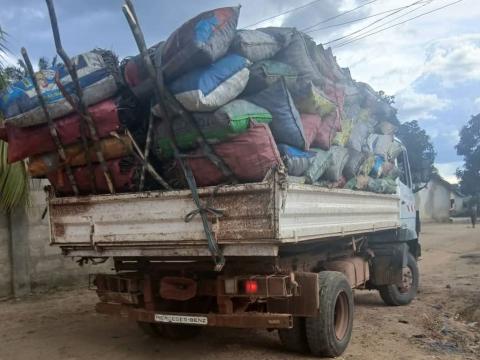
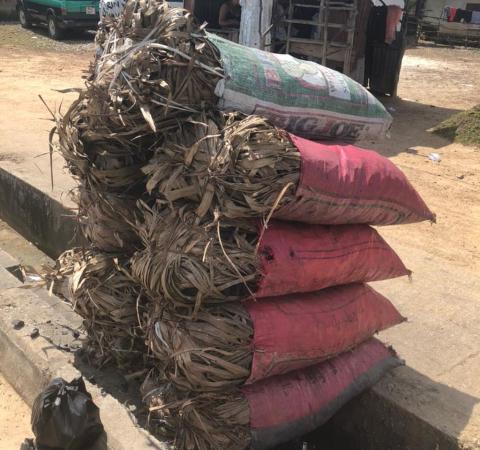
65-year-old Pa Alimamy has been a charcoal burner for more than two decades. It’s a trade, he said, that keeps him alive. “My entire family relies on it as a source of livelihood.”
Charcoal trade is common across Sierra Leone especially in the capital, Freetown and other regional headquarter towns, given ever increasing demands for it use against other alternative means of cooking. The latest National Energy Compact developed by the government of Sierra Leone as part of the mission 300 initiative with support from the World Bank states that “only 36% of the population has access to electricity. Clean cooking access is even more critically limited at just 15%”.
Deforestation, Habitat loss and Environmental Degradation
Charcoal is a product of burnt wood generally used for cooking, especially in low-income countries in Africa and the practice is predominant among households in Sierra Leone where many people cannot afford the cost that comes with cooking, using gas or electricity. Processing charcoal requires the cutting down of trees, and the burning in itself emits greenhouse gas, harmful for human consumption. This issue does not only impact environmental degradation; it leads to biodiversity loss caused by the environmental war waged on their homes to satisfy man’s energy needs.
Speaking to Politico in an interview, the Director of Natural Resource Governance at the Environmental Protection Agency in Sierra Leone acknowledged the environmental hazards posed by the practice. He noted that to make things worse, charcoal burners now cut down economic trees such as orange, mango among others, while leaving the land treeless and exposed to climate change effects, and also threatening food security.
Paul Lamin said: “charcoal burning is bad in that the environment is being deforested. It is also bad in the sense that the trees that they cut take a long time to re-grow and we all know that it is the trees that help reduce the carbon space”.
He admitted that there are currently limited options available to the people as an alternative means of energy.
Greenhouse gas emission/ air pollution
From the burning of the trees into charcoal, to using it as an energy source in homes and other places, the process emits large amounts of greenhouse gases, making it harmful to both human health and the environment, according to experts. A report by the Food and Agricultural Organization (FAO) titled the Charcoal Transition: greening the charcoal value chain to mitigate climate change and improve local livelihood, it is estimated that traditional wood energy (Fuel wood and charcoal emits 1/2.4 GT of carbon dioxide equivalent (C02e) per year, accounting for 2-7% of total anthropogenic GHG emissions; SSA accounts for one third of GHG emissions from wood energy.
It states: “given increasing demand for charcoal, a continuation of unsuitable charcoal production and use can be expected to exacerbate climate change which, in return, could affect the health and productivity of forests and woodlands and thereby reduce future wood-energy supplies in many places of the world. In the absence of a realistic and renewable alternative to charcoal in the near future, greening the charcoal value chain is essential for mitigating climate change while maintaining the access of households to renewable energy”.
The regulatory framework
Although there are currently no laws banning the use or burning of charcoal in Sierra Leone in the face of the prevailing circumstances, the EPA and other partners have instituted a number of control measures through community bylaws enforced by a Chiefdom Environment Committee headed by the Paramount Chiefs as mandated by the new EPA ACT of 2022.
According to director Lamin, the committee has to establish a bylaws that guide the practice of indiscriminate-charcoal burning across the country. “People would continue to burn charcoal, but in a controlled manner. The committees which have been established are now working on the bylaws that they would monitor,” he said.
He added that the bylaws require every charcoal burner to register with the committee, demarcate areas where trees can be cut for charcoal burning, prohibit the cutting of economic trees, mandatory reforestation by the registered charcoal burners, and avoid the cutting down of trees around villages and towns. “Maintaining forests around villages will help guard them against the vagaries of the weather, including heavy winds. But people have been cutting down those trees to burn charcoal, exposing them to constant danger of roofs being blown away,” he said. He pointed out that the committee is very important in ensuring compliance and monitoring in that they live with and know the problems and the actors better.
“We have signed an MOU with the committee to ensure that they are able to effectively monitor and execute their roles as a committee and we are hopeful that this will minimize the existing indiscriminate cutting of woods and trees,” he said.
Renewable Energy Alternatives
“Currently, it is quite impossible to place a ban on charcoal burning, because if you place a ban, there must be an alternative and so the other plan is to control it,” he said.
Ensuring clean cooking and alternative energy sources such as gas and electricity require collective action that does not only rest on the EPA, the director said.
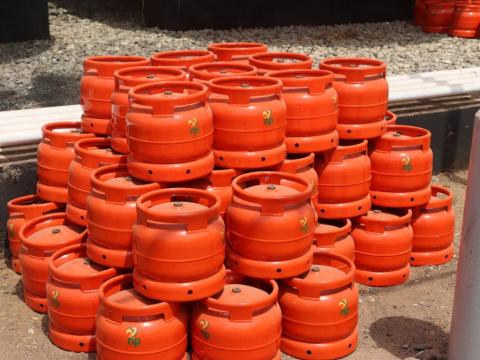
Current cost of a full gas cylinder ranges between Le360 to 4,411 for from 3kg to 66kg respectively in the market.
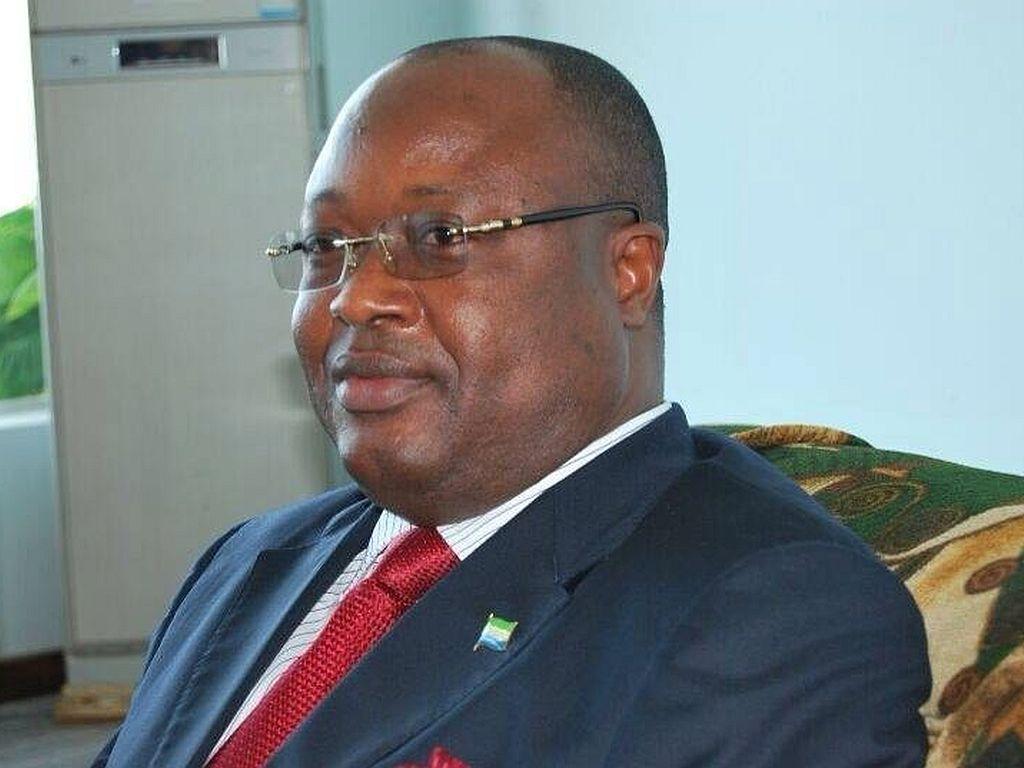
The issues of renewable Energy alternatives as part of efforts to minimize the harmful effects of climate change has been at the fore at global and regional meetings. In one of such recent engagement at the ECOWAS FORUM, the Chairman of Sierra Leone’s Presidential Initiative on Climate Change, Renewable Energy and Food Security (PI-CREF), Dr. Kandeh Kolleh Yumkella also called for united action on the clean energy agenda, urging member states to act big on energy.
He was delivering the keynote address at the 10th ECOWAS Sustainable Energy Forum (ESEF 2025), held at the Sir Dauda Kairaba Jawara International Conference Centre in Banjul, The Gambia.
Speaking on the theme “Accelerating the Clean Cooking Transition in West Africa,” Dr. Yumkella emphasized that universal access to modern cooking solutions is critical to achieving Sustainable Development Goal 7 (SDG-7), and advancing health, gender equality, climate resilience, and poverty reduction across the region.
He called for a multi-fuel strategy and stronger collaboration among governments, private sector actors, and development partners to scale up clean cooking technologies.
“While our kitchens are the testing ground of cooking stoves, they also pose silent threats to women’s health and the environment.
It is time to bridge the energy gap by scaling clean cooking interventions and driving a just, fairer, and more equitable energy transition,” he said.
Dr. Yumkella urged ECOWAS member states to adopt a unified regional vision for clean cooking, integrate it into national energy planning, and establish clear standards. He also advocated for carbon finance mechanisms, duty waivers to improve market access, and the formation of National Clean Cooking Alliances to accelerate progress.
Highlighting Sierra Leone’s commitment, he noted that President Julius Maada Bio’s administration has made food security, energy transition, and climate resilience, central to its development agenda.
“As Chairperson of the ECOWAS Authority of Heads of State and Government, President Bio’s regional leadership is expected to galvanize support for the ECOWAS Renewable Energy and Energy Efficiency Master Plan 2026–2036, aimed at achieving universal energy access by 2030,” he said.
On the sidelines of the forum, Dr. Yumkella met with Gambian Vice President, Muhammad B. S. Jallow reflected on the early efforts to establish the ECOWAS Centre for Renewable Energy and Energy Efficiency (ECREEE), which was launched during his tenure as Director- General of the United Nations Industrial Development Organization (UNIDO).
He also called for Sierra Leone’s Electricity Distribution and Supply Authority (EDSA) to reduce technical and commercial losses, citing progress made by other ECOWAS nations. Under the new Mission 300 (M300) Energy Compact, Sierra Leone expects to add 180 MW of power by the end of 2026, including 60 MW by March 2026.
While the Millennium Challenge Corporation (MCC) is significant in its own right, Dr.Yumkella said that such an investment will help rebuild the country’s transmission and distribution infrastructure, improving grid stability and household connectivity.
Launched in 2016 by ECREEE, the ECOWAS Sustainable Energy Forum has become the region’s leading platform for shaping energy policy and fostering partnerships. The 2025 event, held from September 18–19, brought together government officials, representatives of financial institutions, private sector leaders, researchers, and civil society activists to address energy access, clean cooking, and regional energy resilience.
However, these moves, according to the Director, are long term plans.
Like Pa Alimamy, for Aminata Koroma, 35, a petty trader in charcoal, her life depends on it. “Forget about the fact that my family survives through this business, and that without coal or wood we cannot eat because what else do we use to make fire. I cannot even talk about gas because I can’t afford it.”
This investigation was supported by BBC Media Action and funded by Deutsche Gesellschaft für Internationale Zusammenarbeit (GIZ) GmbH on behalf of the German Federal Ministry of Economic Cooperation and Development (BMZ), co-funded by the European Union (EU).
Copyright © 2025, Politico Online